
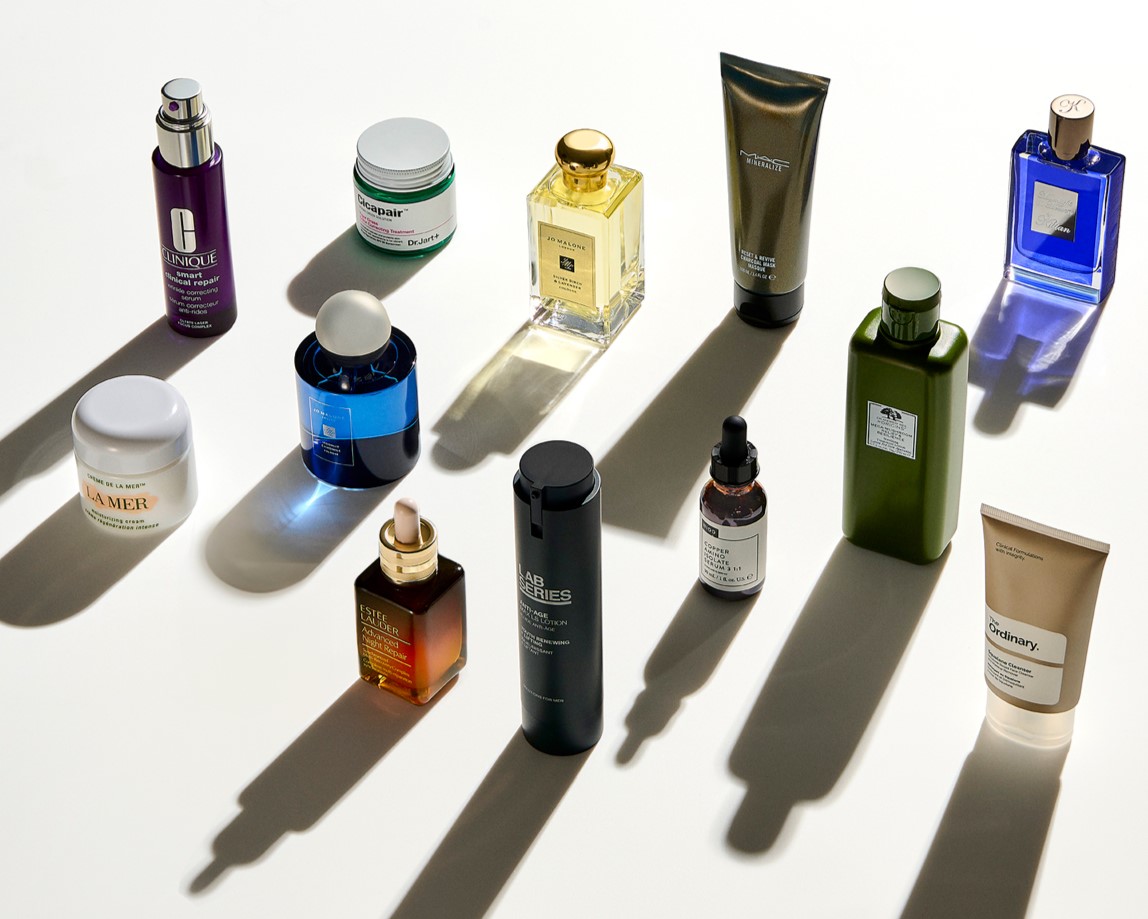
The world’s largest prestige beauty company is consolidating its brand portfolio onto Shopify. Tom Ford Beauty and Lab Series launched in March. M·A·C followed on August 12. Five months, three brands, one order operations layer, and a foundation built for the brands that come next.
Key Takeaways
- The Estée Lauder Companies is consolidating separate brand-by-brand commerce stacks onto one modern foundation: Shopify on the front end, Pipe17 as the order operations layer connecting to Radial, SAP, and ELC’s logistics partners across the US, UK, and Canada.
- Tom Ford Beauty went live March 16, 2026 (US online and UK Free Standing Store). Lab Series (US online) followed less than 48 hours later on March 18. M·A·C’s US website cut over in the early hours of August 12, 2026. Five months, three brands, no drama.
- Pipe17 came in 30 to 40 percent below a standalone OMS plus a custom integration build.
- Every ELC brand runs as its own configuration on shared infrastructure, so a change for one brand never waits on another, and every launch after the first inherits the patterns of the one before it.
- Additional ELC brands are scheduled to move to the platform this year.
A House Built One Brand at a Time
In 1946, Estée and Joseph Lauder started with a handful of creams and a conviction: prestige beauty deserved a category of its own. They sold it by hand, one counter and one customer at a time, on the belief that how a product made a person feel was the whole business.
Eight decades later, that conviction is one of the most valuable portfolios in beauty. More than 20 brands across skincare, makeup, fragrance, and hair care. Estée Lauder, Clinique, MAC, La Mer, Bobbi Brown, Aveda, Jo Malone London, Tom Ford Beauty, Lab Series. Sold in roughly 150 countries, more than $15 billion in fiscal 2024 revenue, about 62,000 people. Each brand keeps its own identity, its own customer, and its own commercial calendar. That is the strength of the house. It can be many things to many audiences at once.
It is also the ambition that defines the next decade. The future of a global beauty house is the ability to meet more customers, in more places, across more generations and price points, each brand with its own voice and its own experience.
Behind the brands, though, ELC had accumulated something else. A sprawl of separate commerce stacks, each built and maintained by a different team, each connecting storefronts to fulfillment and finance its own way. Every duplicated system added cost. Every change meant repeating the same work somewhere else. The very independence that made the brands strong was, at the technology layer, making the whole company slower and more expensive to run. The mandate was clear: consolidate onto one modern stack, take cost out of the business, and make launching the next brand easier instead of harder.
The Problem Was Cost and Inefficiency
Nine versions of the same commerce plumbing meant nine times the maintenance, nine integration roadmaps, and nine teams solving problems each other had already solved. The work never compounded. For a company that intends to keep adding brands and channels, that math runs the wrong way. Each launch made the estate more complex and more costly. A common modern stack was the way to take real cost out, on the order of tens of millions a year, and give every brand a faster, cheaper path to market.
ELC announced its Shopify partnership in October 2025 as the front-end foundation for the portfolio. The storefront was the easy call. The hard question sat underneath it. Shopify does not, on its own, route an order to the right Radial distribution center, reconcile the financial record into SAP, coordinate fulfillment across ELC’s logistics partners in the US, UK, and Canada, or apply the promotions, gift wrap, and shipping rules that vary brand by brand. Something had to sit between the storefront and everything behind it, for every brand, on one common platform, and run the entire operation.
Why ELC Chose Pipe17
The default move for a company this size would have been to build that layer in house. ELC chose against it because building an integration is never the expensive part. Maintaining it for a decade is. A custom build would have recreated the exact sprawl ELC was eliminating, one connector and one brand at a time.
“We could have fallen into the trap every brand has fallen into and tried to build this ourselves. Everyone has been building its own version of the same thing for years. Pipe17 gave us one order operations layer that our own teams can run, and it came in well below what building and maintaining it ourselves would have cost.”
Kumkum Pinto, Vice President, Digital Product Management, The Estée Lauder Companies
Pipe17 took the opposite shape. Rather than another point-to-point integration, Pipe17 is an order operations layer that orchestrates the whole flow. It ingests Shopify orders, applies each brand’s handling rules, routes to Radial’s Order Management Platform and ELC’s other logistics partners, and feeds clean financial data to SAP through webMethods. A canonical data model normalizes orders, inventory, products, and fulfillment across every system, so a new brand can be added without rebuilding the schema. A library of more than 300 managed connectors is kept current by Pipe17, not by ELC’s engineers. Each brand is configured independently within the shared platform, so a change for one never waits on another. ELC also had a structural head start. Pipe17’s established agreement with Radial made the commercial path far simpler than assembling the pieces alone.
The economics settled it. Against the all-in cost of a standalone OMS, a separate integration layer, and the engineering to maintain both, Pipe17 came in 30 to 40 percent lower. The platform also gave ELC room to grow, and single sign-on with ELC’s identity provider meant ELC’s own teams could operate the system from day one.
It is the same logic ELC has always applied to its business. It has never owned the farms that grow its botanicals or the carriers that ship its products. It partners with the best in each layer and puts its own capital into brand and customer experience. The order operations layer is one more expression of that strategy.
Three Brands Live in Five Months
Tom Ford Beauty. March 16, 2026. Tom Ford Beauty went live on Pipe17 the morning of March 16, covering US online and the UK Free Standing Store. Real orders flowed from Shopify into Pipe17, out to Radial for routing and allocation, and onward to fulfillment within minutes of cutover.
Lab Series. March 18, 2026. Lab Series followed less than 48 hours later, going live early on March 18 (US online) with the same clean pattern. Two iconic brands moved onto the common stack inside a two-day window.
M·A·C Cosmetics. August 12, 2026. M·A·C’s US website cut over in the early hours of August 12. Every order placed since has flowed through Pipe17. Five months after Tom Ford Beauty and Lab Series, three brands from one of the world’s largest beauty companies run their commerce on Shopify with Pipe17 as the order operations layer underneath.
The speed came from building the layer once for the portfolio rather than once per brand. The rollout was phased on purpose. Rather than cutting over every brand at once, the team got the first brands live cleanly and built confidence before expanding. The Phase 1 design was deliberately simple, with Pipe17 acting as a pass-through between Shopify and Radial and no custom business logic loaded in early. That restraint made the first launches fast. It also let every launch after them reuse the patterns of the one before it. The value of a move like this is not only the brand that went live. It is how much faster and cheaper the next brand becomes.
“A single order in beauty can carry a gift card, a promotion code, and a split shipment because one shade is backordered. None of that is visible to the customer and all of it has to be right. That is the layer we run, and it has to work from the first order, not the hundredth. We built it once for the whole portfolio, and every brand that follows inherits it rather than rebuilding it.”
Mo Afshar, CEO, Pipe17
What Consolidation Really Buys
The point of one modern stack is the freedom it promises for ELC.
Brand autonomy without an engineering ticket. Each brand operates as its own Pipe17 organization, with independent automations, integrations, and routing rules. A change to Tom Ford Beauty’s fulfillment logic does not touch Lab Series. A new promotional flow on M·A·C does not require an engineering ticket for the others. ELC’s operations team configures per-brand behavior directly. For a company built on the idea that each brand is its own business, the operations layer finally matches the org chart.
The expensive edge cases pay for the platform. A handful of routine cases cost money when they are handled wrong, and Pipe17 handles them as configuration. Military and APO addresses are forced to USPS automatically because carrier rules require it. Gift wrap line items, chargeable but never physically fulfilled by the 3PL, are handled so that order status in Shopify stays accurate. Address handling catches problems before they reach the 3PL, where each correction carries a cost. Order state moves through real milestones (received, validated, routed, allocated, shipped, delivered) with status written back into Shopify so customer service has a live answer when a shopper asks where an order is.
Exception handling that does not fall into a queue no one owns. When something cannot be routed, when a SKU is misaligned, when a payment authorization expires before capture, Pipe17 surfaces the exception to ELC’s team with the data needed to act, rather than letting orders fall into a queue no one owns.
The next launch is cheaper than the last. Because the first rollouts were deliberately simple, every pattern they established is reusable. The real return on a five-month, three-brand run is what it does to the cost of brand four, and five, and nine.
What Comes Next
Additional ELC brands are scheduled to move to the platform this year. The pattern that stood up three brands in five months compounds across launches rather than restarting with each one. The canonical data model, the managed connectors, the platform architecture. The same foundation absorbs new channels (TikTok Shop, marketplaces, additional geographies), new store networks, and additional operational capabilities as each brand comes online.
The strategic value of the platform is not in what it does for Tom Ford Beauty, Lab Series, and M·A·C today. It is in what it enables ELC to do next. A portfolio this large should get easier to run as it grows, not harder. That is the whole thesis of the move.
Why It Worked
ELC has never owned the farms that grow the botanicals in its skincare, the foundries that mold its packaging, or the carriers that ship its products. The strategy has always been to partner with the best in each layer and to put its own capital into brand and customer experience, the parts that actually differentiate prestige beauty. The order operations layer follows the same logic. Owning the integration plumbing would not make ELC better at brand or customer experience. Partnering with a platform whose core business is keeping that plumbing current sends ELC’s engineering investment to the parts customers see.
What Tom Ford Beauty, Lab Series, and M·A·C demonstrated is that putting an enterprise brand on Shopify no longer has to be a multi-year program. It can be a fast, clean launch, repeated brand by brand, at a lower total cost than building it in house. Competitive advantage in prestige beauty lives in the brand, the formulation, the storefront, and the customer relationship. It does not live in order operations infrastructure.
For enterprise retailers weighing a Shopify migration, the storefront move is no longer the risk, and the integration build is no longer the cost. Three iconic brands live in five months, at 30 to 40 percent below the standalone OMS alternative, on a pattern built to repeat across the largest prestige beauty portfolio in the world. The plumbing is solved. The only question left is what your team does with the engineering budget it gets back.
About The Estée Lauder Companies
The Estée Lauder Companies Inc. is one of the world’s leading manufacturers, marketers, and sellers of quality skincare, makeup, fragrance, and hair care products. Its products are sold in approximately 150 countries and territories under brands including Estée Lauder, Aramis, Clinique, Lab Series, Origins, MAC, Bobbi Brown, La Mer, Aveda, Jo Malone London, Bumble and bumble, Smashbox, Tom Ford Beauty, and more. Learn more at elcompanies.com.