
Pipe17 is the quick and reliable way to integrate Deposco with the commerce applications your business relies on and streamline the flow of orders, fulfillments, inventory, products, returns, exchanges, purchase orders, transfer orders, arrivals, and receipts across your omnichanel order operations.
Modern Merchants Choose Pipe17







With Pipe17, it only takes minutes to connect Deposco to your ecommerce platforms, DTC and B2B marketplaces, point of sale systems, other fulfillment centers, ERP, data lake, returns system, and EDI trading partners. Once connected, Pipe17’s Omnichannel Order Hub has all the workflows, logic builders, and additional functionality ecommerce operators need to automate omnichannel order-to-anywhere processes so every order lifecycle conforms to your businesses unique needs.

is better with

Integrate Faster and Smarter
Connect Deposco with your digital stores, marketplaces, POSs, ERP, returns system, EDI trading partners, and back-office apps in minutes with Pipe17's ecommerce aware connectors
Automate Order-to-Anywhere Flows
Remove the work from order processing and automatically send orders to Deposco for fulfillment with dynamic order routing that easily adapts to your needs today and in the future
Keep Your ERP in Sync With Deposco
Connect Deposco to your ERP and bi-directionally sync dozens of data types in real-time including arrivals, receipts, inventory, products, returns, and more—in less than two weeks
With the Pipe17 + Deposco connector you can…
Connect
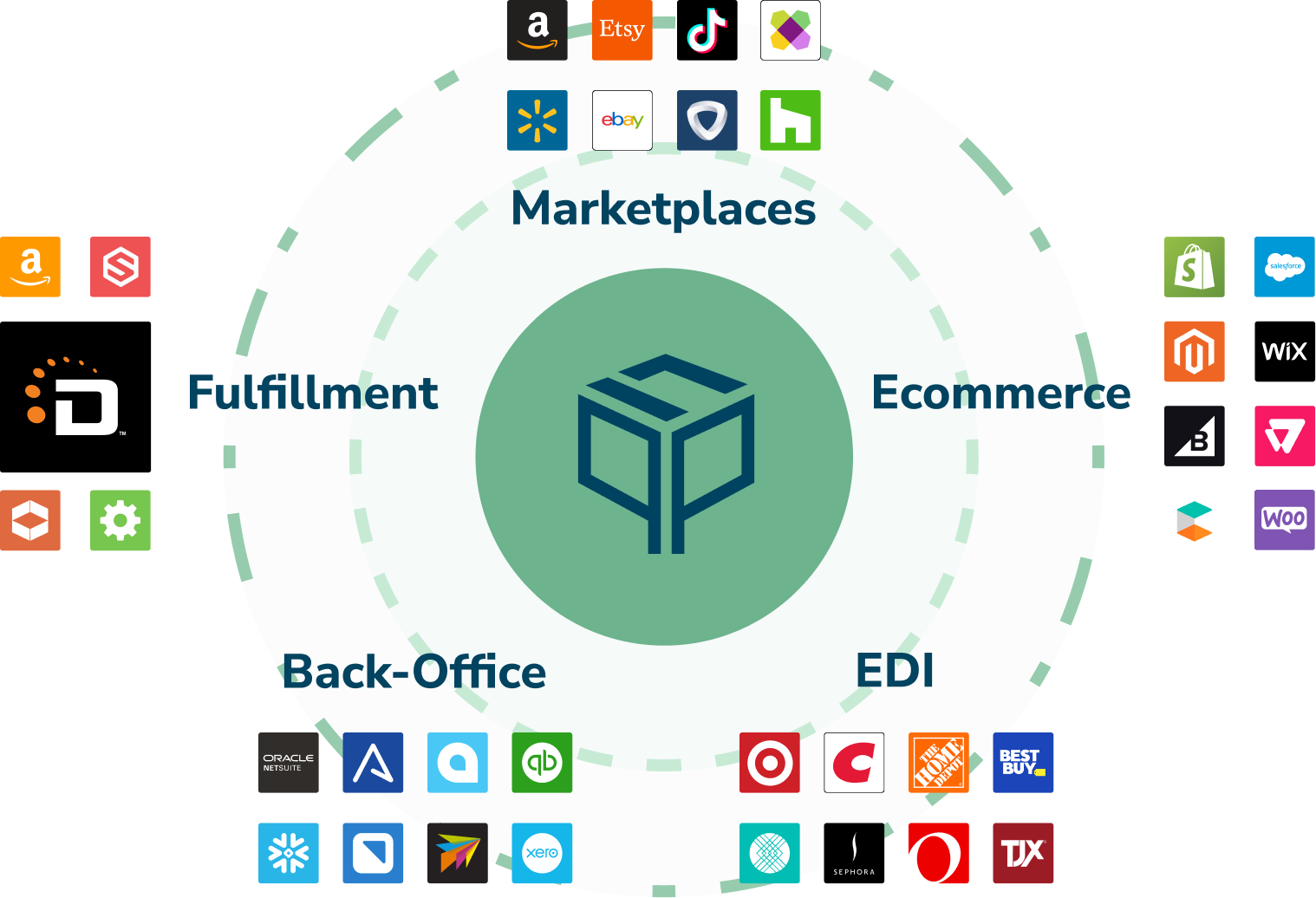
Connect Deposco to the channels you use today and add, swap, or remove channels any time without disrupting your operations or needing to rearchitect your processes.
Quickly integrate hundreds of selling channels, back-office apps, and other fulfillment centers to Deposco with the largest portfolio of smart commerce connectors.
Integrate custom software and extend business processes with Pipe17’s open API.
- Ecommerce platforms (e.g., BigCommerce, Magento, Salesforce, Shopify Plus, WooCommerce)
- DTC and B2B marketplaces (e.g., Amazon, eBay, Mirakl, TikTok Shop, Walmart, Wayfair, BrandBoom, CommerceHub, DSCO)
- Point of sale systems (e.g., Lightspeed, Shopify, Square)
- ERPs and accounting systems (e.g., Accumatica, ApparelMagic, NetSuite, QuickBooks, Xero)
- Returns systems (e.g.,Loop)
- Back-office apps (e.g., ChannelAdvisor, Feedonomics, Snowflake)
- EDI trading partners (e.g., Costco, DSW, Nordstrom, PetSmart)
Synchronize
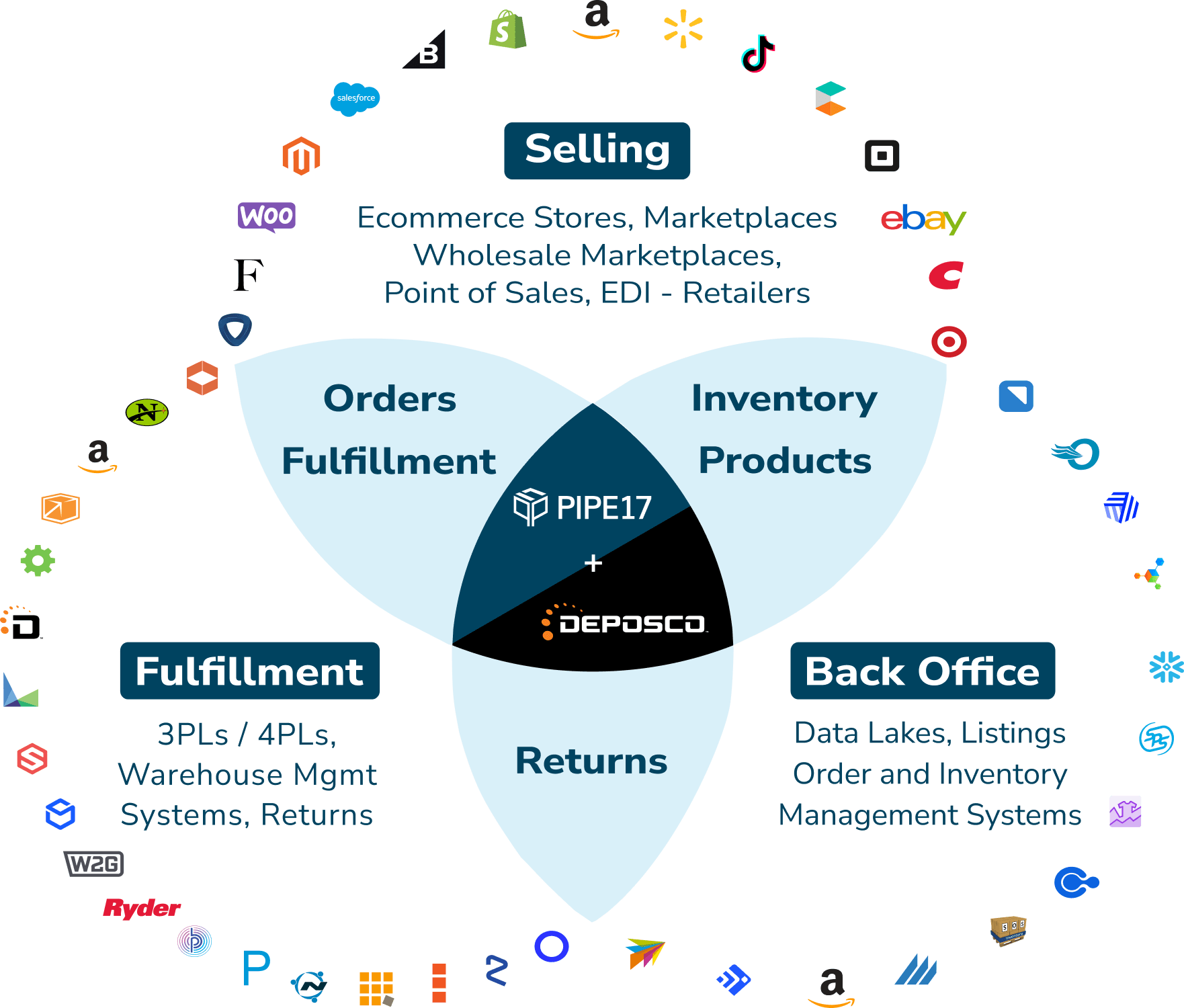
Synchronize dozens of commerce data flows between Deposco and all your connected selling channels, back-office apps like ERPs, and returns systems—in real-time.
- Receive tracking numbers and fulfillment updates in the order source channel for every Deposco fulfillment
- Sync Deposco with your ERP or system-of-record so inventory is always accurate and products are always up to date
- Instantly update available inventory on all your omnichannels when Deposco ships an order and when new stock is received
- Automate your purchase order and transfer order workflows between your system of record and Deposco

“What Pipe17 does really well is manage complex logistics for merchants who don’t want to build a custom solution. Pipe17 has the capability to manage lots of different channels and solves complex use cases.”
Stephanie Peng | Co-Founder and CEO @ St. Frank
Route
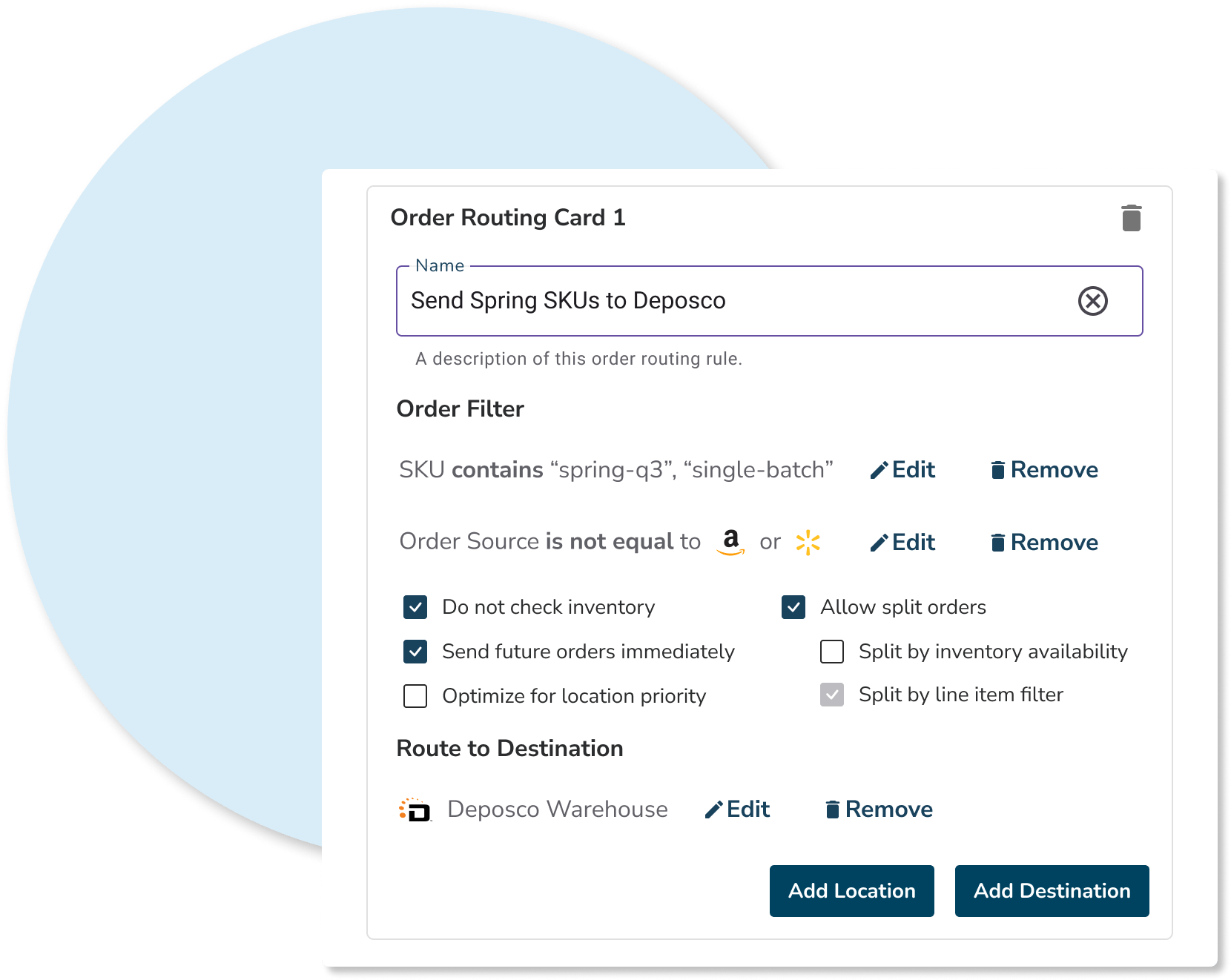
Touchlessly route orders of any volume, complexity, or frequency from any connected selling channel (or ERP) to Deposco for fulfillment.
- Create and adjust order routing rules to match your dynamic priorities with customizable filters like order source, total order price, closest location, SKUs, and hundreds of more options
- Eliminate errors in kit and bundled product fulfillment with dynamic order splitting into component line items prior to sending a shipment request to Deposco
- Set channel-specific order holds and map SKUs and shipping methods across channels—all with just a few clicks

“Pipe17 is hands down the easiest and most elegant order fulfillment solution. Our fulfillment pipeline is now fully automated, and I no longer have to worry about order routing and managing fulfillment.”
Ethan Steip | Operations and Ecommerce Manager @ Wufers
Visualize, Analyze, Act
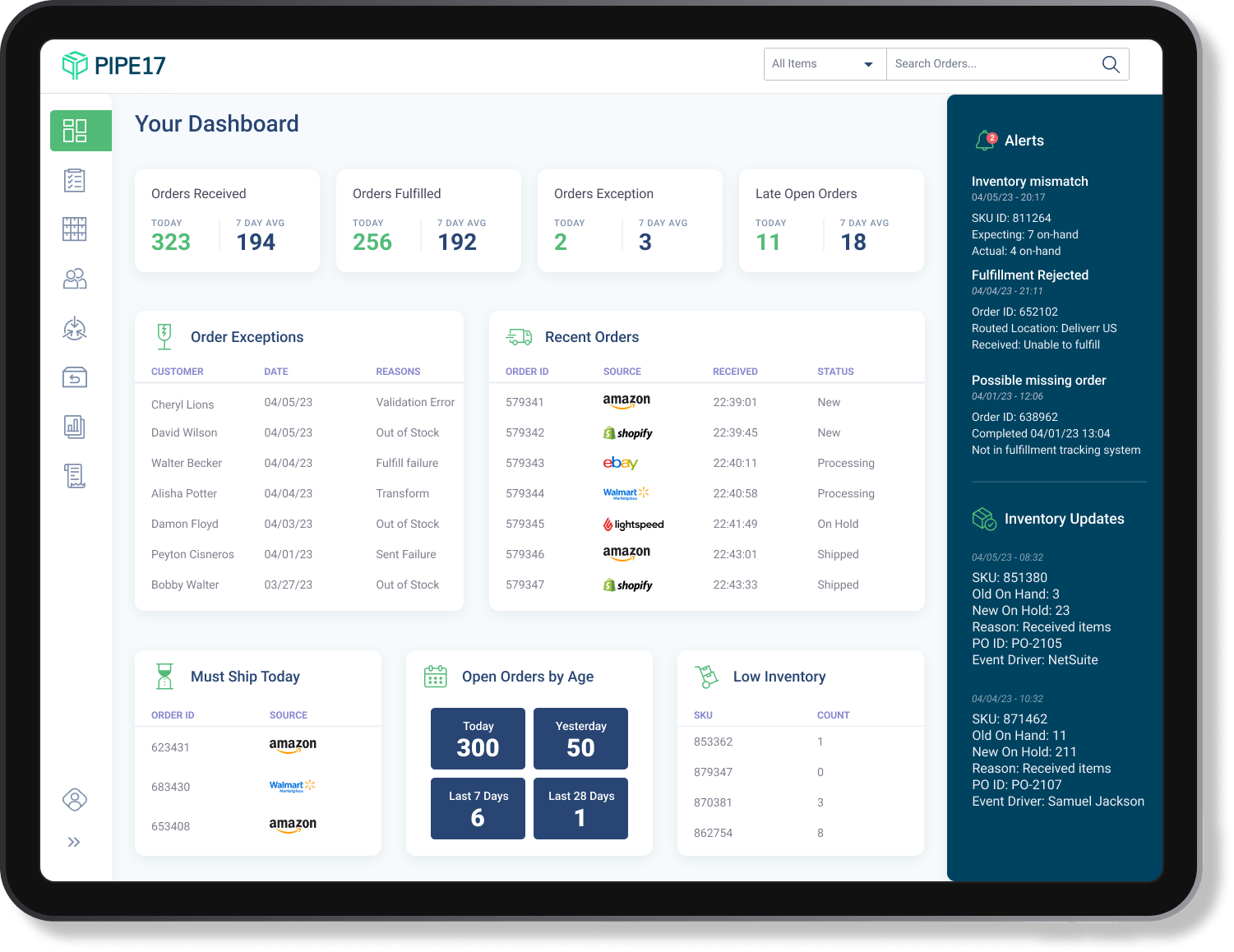
Eliminate the blind spots and data gaps that leave you in the dark. Pipe17 pulls data from all of your commerce applications and consolidates it into a single view—and sends you actionable notifications if problems occur.
- View and manage omnichannel orders, inventory, fulfillment and returns from one centralized LiveOps dashboard
- Instantly analyze Deposco, and your entire omnichannel order operations, data with Pipe17 normalized data streams to any Data Lake or repository of choice
- Receive real-time alerts if an error happens anywhere during the order-to-fulfillment lifecycle so you can fix the problem before it impacts customer service and satisfaction

“Pipe17 revolutionized how we monitor our operations. Now we know what’s happening with every order, what needs our immediate attention, how to fix problems when they arise, and how our channels are performing.”
Leslie Street | CFO and COO @ Amour Vert
Ready to connect Deposco to your omnichannels and fully automate order-to-fulfillment flows?
Submit this form and a member of the Pipe17 team will be in touch to discuss your specific needs.