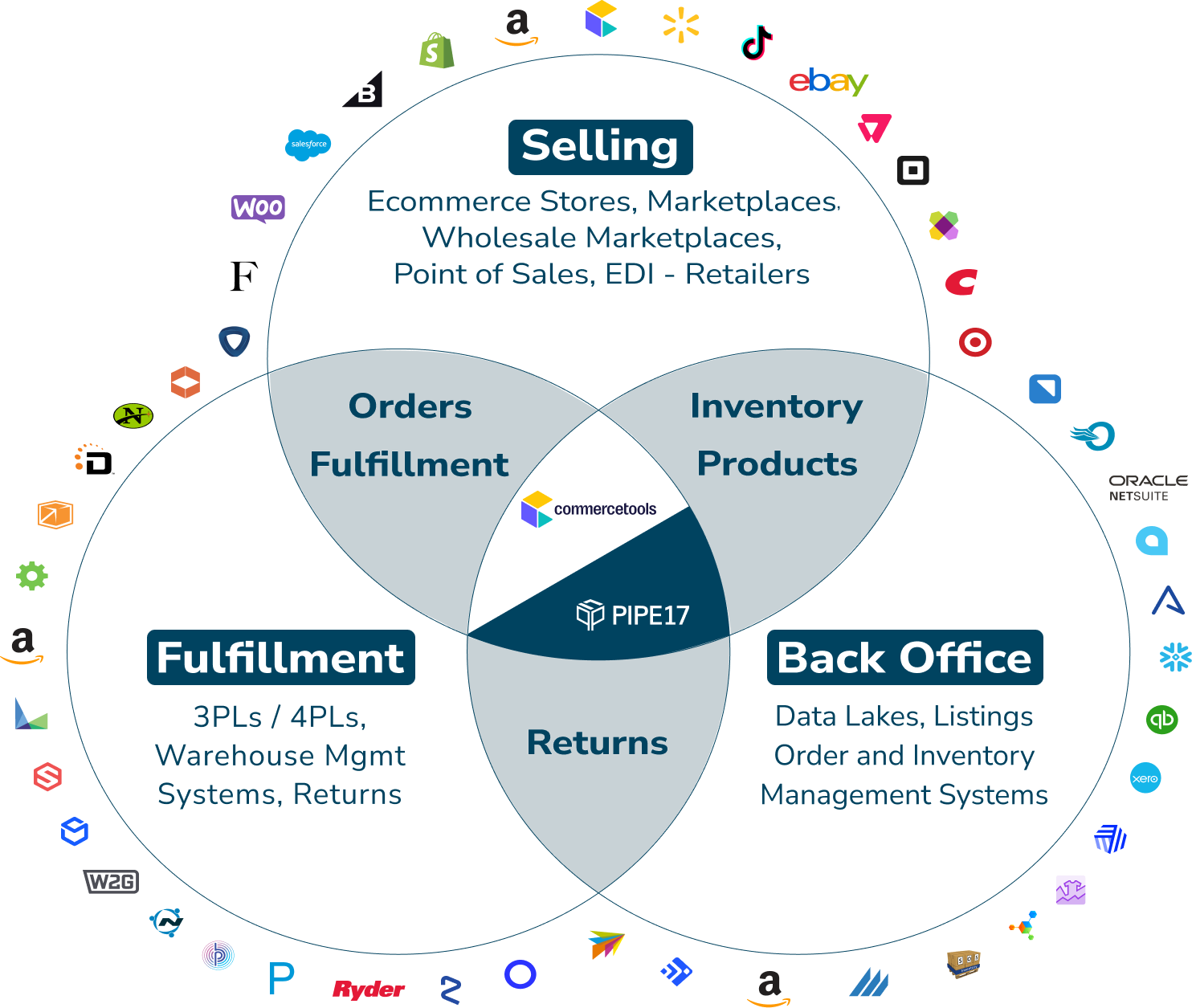
Pipe17 is the fast and smart way to 1.) integrate the applications your commerce business runs on with commercetools and 2.) streamline the flow of orders, fulfillments, inventory, products, returns, and exchanges across your omnichanel order operations.
Modern Merchants Choose Pipe17
Pipe17’s Omnichannel Order Hub has all the capabilities and components ecommerce operators need to automate omnichannel order-to-anywhere processes so every orders lifecycle matches your unique business needs.
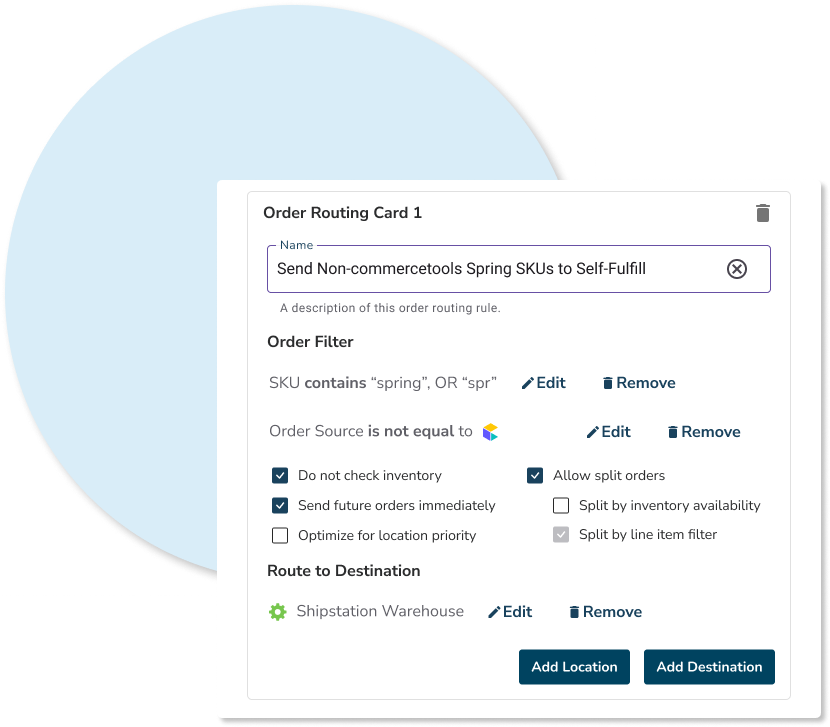
Touchlessly process orders from commercetools to the optimal fulfillment destination(s) with dynamic, customizable, and adaptable order routing
Sync commercetools With Your ERP
Bi-directionally sync dozens of data types including orders, fulfillments, inventory, products, returns, and more between commercetools and your ERP
Connect
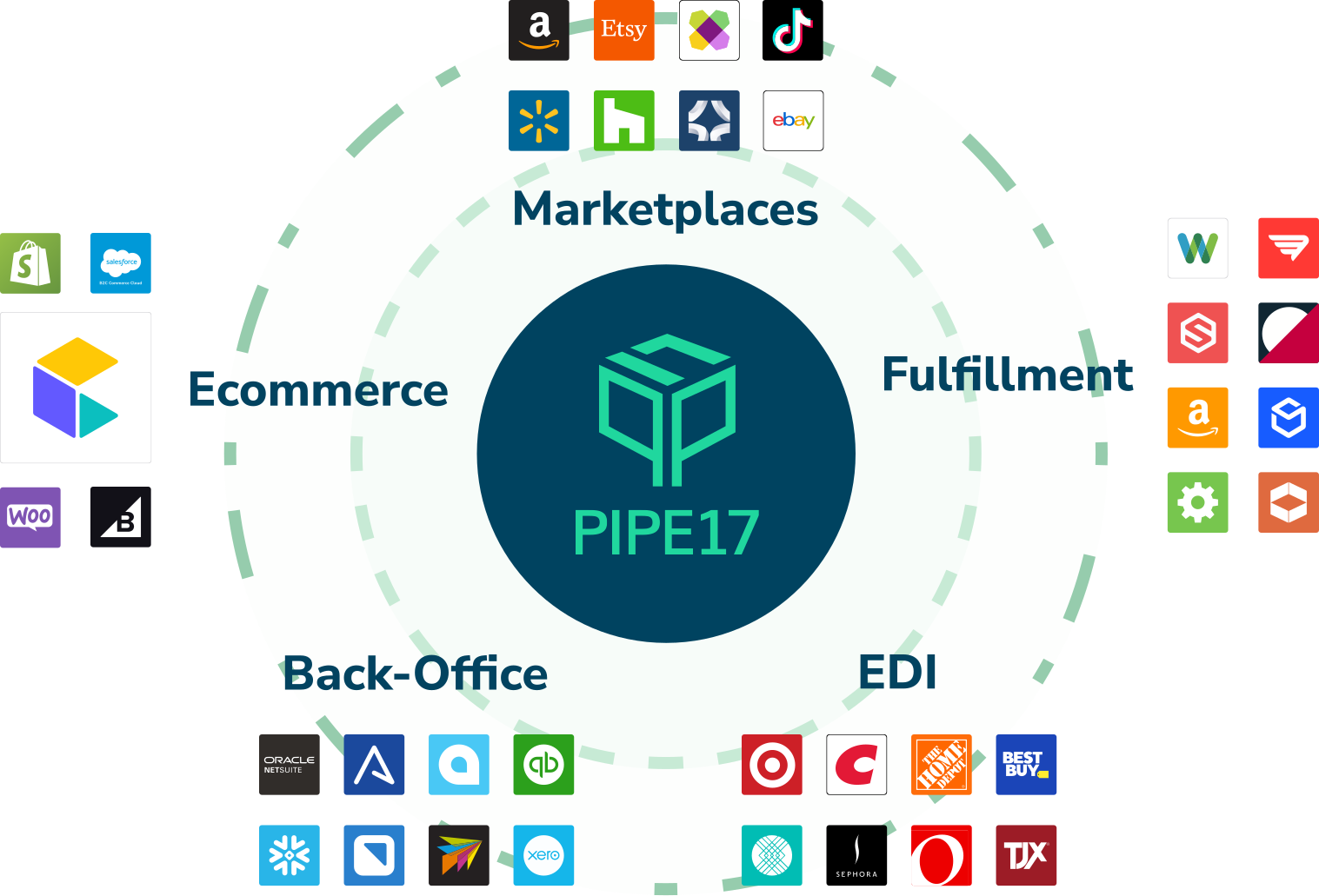
Connect commercetools to your omnichannels, and add, swap, or remove channels as your business evolves without disrupting your operations or rearchitecting your processes.
Quickly integrate hundreds of fulfillment, marketplace, and back-office apps like ERPs to commercetools with the largest portfolio of commerce-aware connectors.
Integrate custom software and expand workflows with Pipe17’s unified API.
ERPs and accounting systems (e.g., Accumatica, ApparelMagic, NetSuite, QuickBooks, Xero)
Synchronize dozens of commerce data flows between commercetools and all your connected fulfillment centers, marketplaces, and back-office applications—in real-time.
Receive tracking numbers and fulfillment updates in commercetools for every order
Align commercetools with your ERP or system-of-record so inventory is always accurate and products are always up to date
Instantly update available inventory on all your selling channels when any order ships or new stock is received
“What Pipe17 does really well is manage complex logistics for merchants who don’t want to build a custom solution. Pipe17 has the capability to manage lots of different channels and solves complex use cases.”
Automatically route ordersofany volume, frequency, or complexity from commeretools to the optimal fulfillment destination (or ERP).
Create and adjust order routing rules to match your business priorities with customizable filters like order source, total order price, closest location, SKUs, and 100+ more options
Eliminate bundled product fulfillment errors with splitting of orders into component line items prior to sending for fulfillment
“Pipe17 is hands down the easiest and most elegant order fulfillment solution. Our fulfillment pipeline is now fully automated, and I no longer have to worry about order routing and managing fulfillment.”
Ethan Steip | Operations and Ecommerce Manager @ Wufers
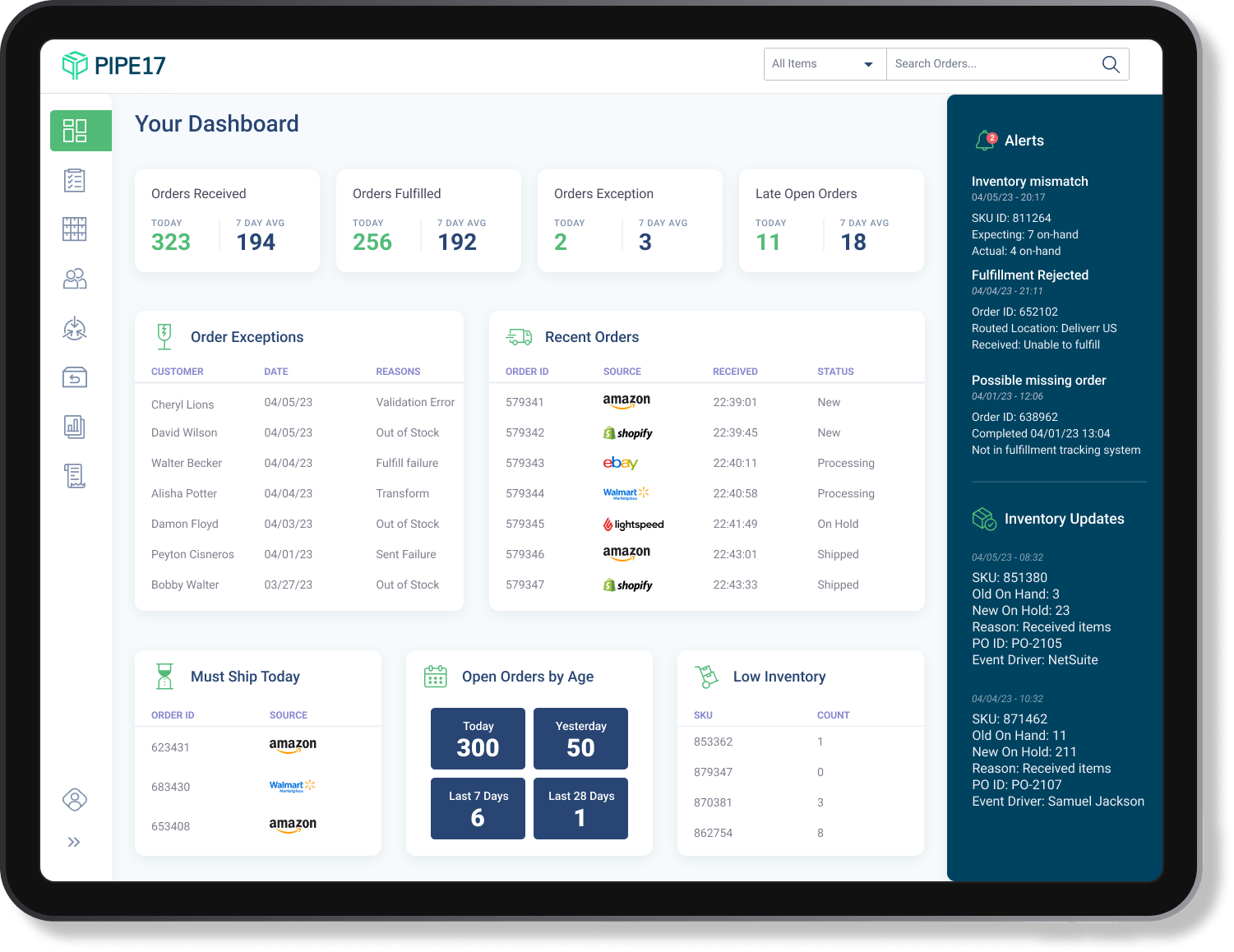
Eliminate the blind spots and data gaps that leave you in the dark. Pipe17 normalizes data from all of your commerce channels, consolidates it into a single view, and sends you actionable notifications if a problems occurs anywhere along the way.
View and manage omnichannel orders, inventory, fulfillments and returns from one centralized LiveOps dashboard
Instantly analyze commercetools and your entire omnichannel order operations data with Pipe17 data streams to your data lake or repository of choice
Receive real-time alerts if an error happens anywhere during the order-to-fulfillment lifecycle so you can fix the problem before it impacts customer service and satisfaction
“Pipe17 revolutionized how we monitor our operations. Now we know what’s happening with every order, what needs our immediate attention, how to fix problems when they arise, and how our channels are performing.”
To provide the best experiences, we use technologies like cookies to store and/or access device information. Consenting to these technologies will allow us to process data such as browsing behavior or unique IDs on this site. Not consenting or withdrawing consent, may adversely affect certain features and functions.
Functional
Always active
The technical storage or access is strictly necessary for the legitimate purpose of enabling the use of a specific service explicitly requested by the subscriber or user, or for the sole purpose of carrying out the transmission of a communication over an electronic communications network.
Preferences
The technical storage or access is necessary for the legitimate purpose of storing preferences that are not requested by the subscriber or user.
Statistics
The technical storage or access that is used exclusively for statistical purposes.The technical storage or access that is used exclusively for anonymous statistical purposes. Without a subpoena, voluntary compliance on the part of your Internet Service Provider, or additional records from a third party, information stored or retrieved for this purpose alone cannot usually be used to identify you.
Marketing
The technical storage or access is required to create user profiles to send advertising, or to track the user on a website or across several websites for similar marketing purposes.