Pipe17 is named a Visionary in the Gartner® Magic Quadrant™ for Distributed Order Management.¹ Gartner’s first Magic Quadrant for the category evaluates providers on completeness of vision and ability to execute.
Why distributed order management starts with inventory
A brand’s orders now come from stores, marketplaces, retailer EDI feeds, and AI assistants, and they ship from warehouses, stores, third-party logistics (3PL) providers, and dropship vendors. The system that manages those orders decides whether inventory is right on every channel, if the customer gets the item by the promised date, and what each shipment costs.
Distributed order management (DOM) is the work of deciding which fulfillment location ships each order, and keeping inventory accurate as orders go out and new stock arrives. In our view, DOM starts with inventory. Accurate inventory depends on connectivity. An OMS cannot promise inventory it cannot see, or route an order to a location it is not connected to. On a legacy OMS, the brand’s team builds and maintains each connection as its own project, and an implementation takes a year or more.
How Pipe17 runs distributed order management
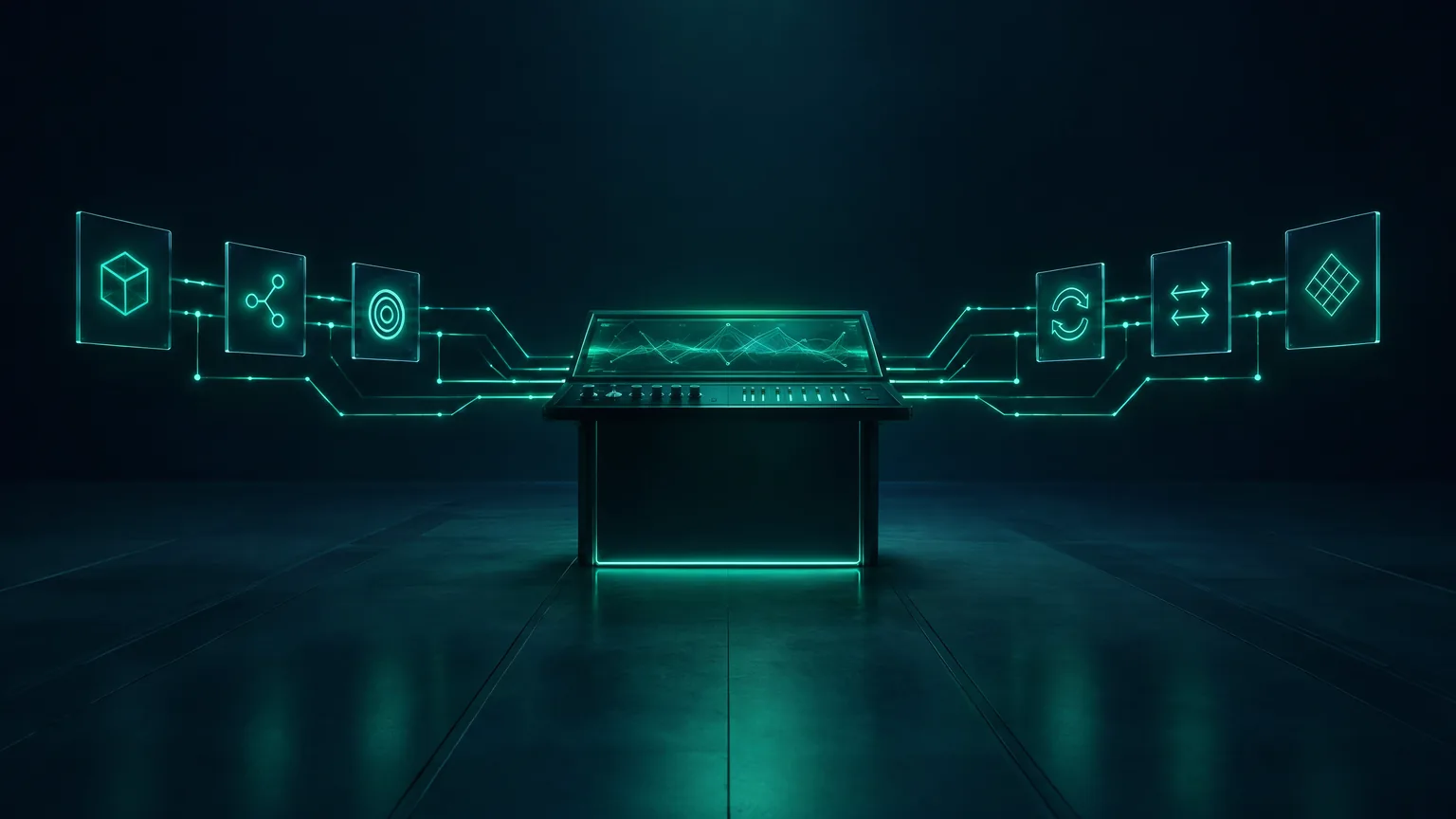
Pipe17 is the connected OMS. Its foundation is the Pipe17 Network, the managed connectivity that links selling channels, ERPs, 3PLs, warehouses, and stores. Pipe17 maintains the Network. There are four ways onto it: pre-configured connectors, the Unified API, EDI, and the Order Network eXchange (onX).
On top is the OMS, Pipe17’s Order Operations Platform, with inventory visibility, order management, order promising, exception resolution, product sync, returns management, and store fulfillment. Operations teams stay in control of their orders and inventory, with no engineering ticket to file.
- Inventory accuracy. One live inventory pool covers every selling channel and fulfillment location, and channel-specific buffers hold the last units for the channels a brand chooses.
- Order routing. Operations teams set the location priority, filters, and inventory check that pick the warehouse, 3PL, or store for each order, and decide when to split or consolidate the order.
- Holds and exceptions. Holds clear on their own or wait for sign-off, and Pippen, Pipe17’s AI order operations agent, explains and resolves exceptions.
- Store fulfillment. StoreOps runs ship-from-store and buy online, pick up in store (BOPIS) on the routing engine that serves warehouses and 3PLs.
- Agentic commerce. Pipe17’s Model Context Protocol (MCP) Server lets AI assistants such as Claude, ChatGPT, Gemini, and Copilot work with a brand’s orders and inventory. It implements onX, an open standard for connecting AI agents to commerce operations. Agents see the same live inventory and order status as the operations team, and an order placed by an agent gets the full OMS behind it, from the delivery promise to the return.
¹ Gartner, Magic Quadrant for Distributed Order Management, November 12th, 2026
Gartner does not endorse any company, vendor, product or service depicted in its publications, and does not advise technology users to select only those vendors with the highest ratings or other designation. Gartner publications consist of the opinions of Gartner’s business and technology insights organization and should not be construed as statements of fact. Gartner disclaims all warranties, expressed or implied, with respect to this publication, including any warranties of merchantability or fitness for a particular purpose.
GARTNER and MAGIC QUADRANT are trademarks of Gartner, Inc. and/or its affiliates.