
The Pipe17 Network connects your channels, ERP, 3PLs, trading partners, and AI agents. Pipe17 keeps every connection working as those systems change. Maintaining integrations stops being your team’s job.
The Problem
Point-to-point builds and iPaaS toolkits share the same fine print: your team owns what happens next. A marketplace changes a field format. An ERP patch moves an endpoint. Each change becomes an engineering ticket, and clearing that backlog, not your commercial calendar, is what sets the launch date for your next channel.
The work you actually care about is orders that route, inventory that reconciles, and product listings that match the catalog. Each of those lasts only as long as the connection underneath it. The Pipe17 Network is the managed alternative.
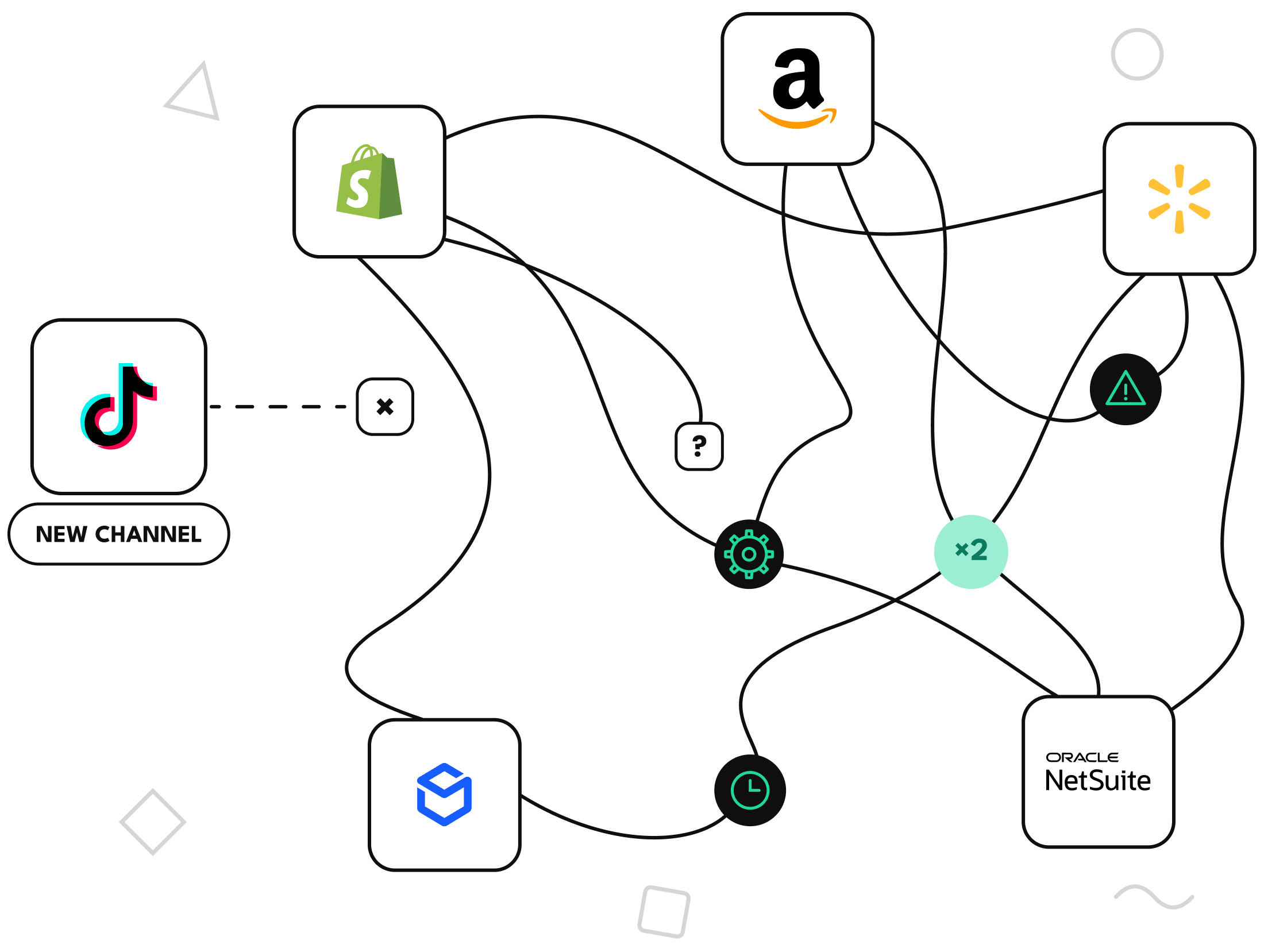
Pipe17 owns the connections, your team owns the outcomes.
The Solution

The Pipe17 Network is the connectivity side of the Order Operations Platform.
Pipe17 operates 300+ pre-configured connectors, and when a channel changes its API, Pipe17 updates the connector before the change becomes your outage.
Pipe17’s Unified API is one interface to every system on the Network, using the same Commerce 360 Data Model™ structure the connectors use.
Pipe17 runs EDI for retail programs, B2B, and enterprise supply chains, and maintains it like every other way onto the Network.
Pipe17 implements the Order Network eXchange (onX), the open standard that lets AI agents work with your order operations through the Model Context Protocol (MCP).

We’ve de-skilled the entire integration process. Our onboarding team handles it. The IT team is out of the loop, and that’s a good thing.
How Pipe17 took integration work off Barrett Distribution’s IT team

Instead of disconnected systems and multiple different integrators, we wanted one source of truth that could feed our ERP system and then feed all our marketplaces and our 3PLs.
One Pipe17 network feeds SACHEU’s ERP, marketplaces, and 3PLs
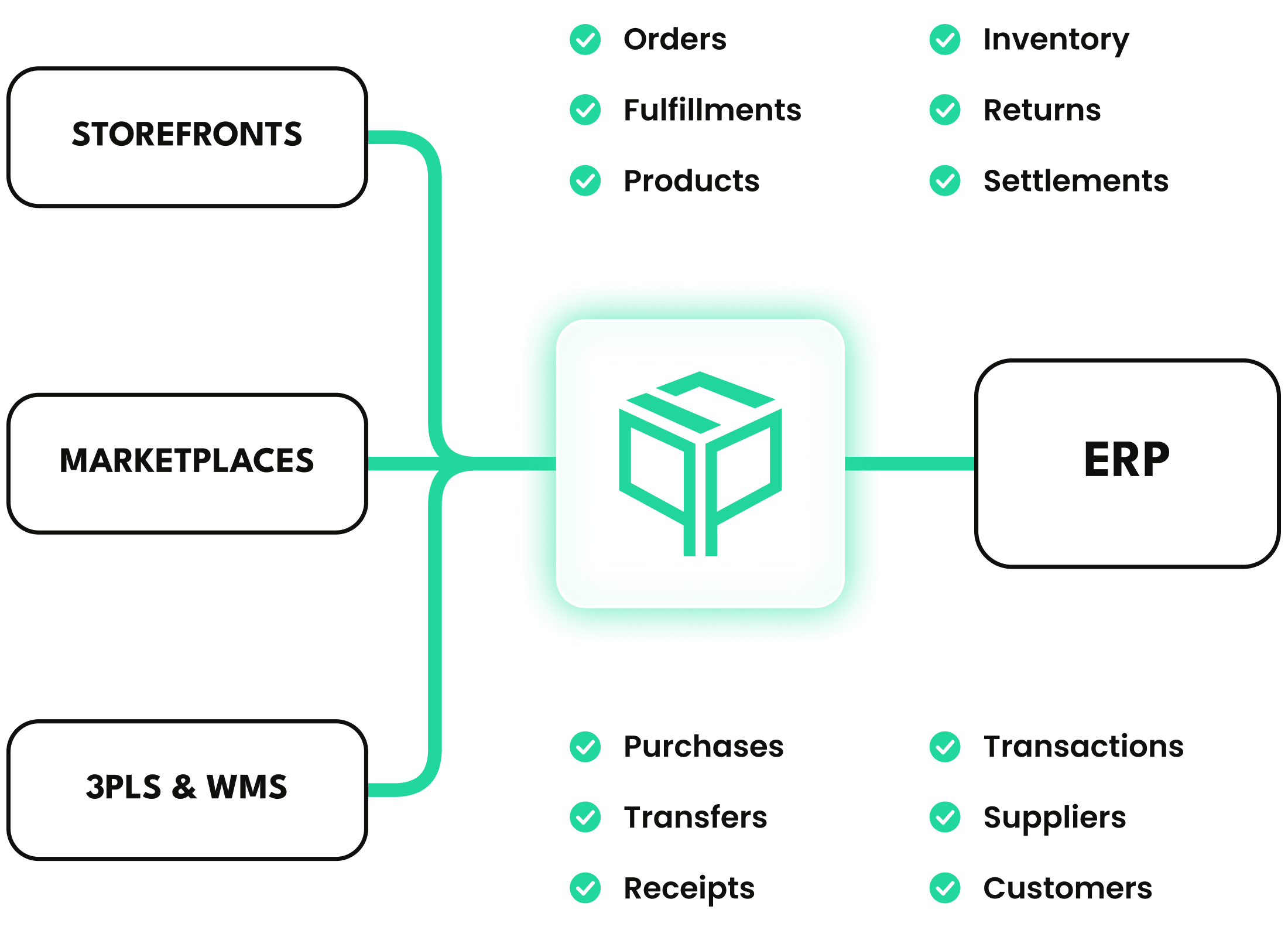
Pipe17’s ERP integration keeps whichever ERP you run and every channel you sell through in agreement, translating each record into the format the receiving system expects. The ERP stays the book of record for finance, and the Network keeps the systems around it consistent.
Pipe17 maintains each ERP connector against that vendor’s own release cycle. A NetSuite integration update ships from Pipe17 instead of landing on your project plan.
Business intelligence (BI) connectors on the Pipe17 Network are managed integrations to Snowflake, Amazon S3, and Google Cloud Storage, exporting order, inventory, and fulfillment data in analysis-ready form. Your analysts and AI agents query operational data in the data warehouse or data lake they already use, and nobody has to build a custom pipeline to get it there.
Connectivity is where the platform starts. Every order, inventory count, and product record the Network carries feeds the rest of Pipe17, the connected order management system (OMS).
Routing, holds, and splits for the orders arriving from every channel.
One reconciled view of stock across every location and system you connect.
Pippen and the MCP Server, acting on the data your connections already carry.
Quick answers for teams weighing the Network against building and maintaining integrations in-house.
ERP integration is the connection between your ERP and the systems that create or consume its data: storefronts, marketplaces, 3PLs, and fulfillment providers. It carries orders in, posts fulfillments and financials back, and keeps inventory and products consistent on both sides. On the Pipe17 Network it is managed: Pipe17 maintains the NetSuite and other ERP connectors as the systems on either side change.
Managed integration services means a vendor, not your engineering team, builds, monitors, and updates your system connections. Pipe17 delivers that as a platform rather than a consulting engagement: the connectors are operated and maintained as part of the product. Coverage does not end with a statement of work.
The Pipe17 Network connects your systems four ways: pre-configured connectors, the Unified API for custom integrations, EDI for trading partners, and onX for AI agents. Pipe17 builds and maintains all four as part of its connected OMS, the Order Operations Platform. Your team gets working connections rather than an integration toolkit.
The Pipe17 Network delivers working connections, where an iPaaS gives your team tooling to build and maintain integrations itself. The full comparison is on Pipe17 vs. iPaaS.
Pipe17’s connectors cover ecommerce platforms, marketplaces, ERPs, WMSs, 3PLs, shipping and fulfillment providers, EDI trading partners, and BI destinations. The connector directory lists every one, searchable by category.
Because Pipe17 maintains every connector on the Network, an API version change is release work Pipe17 does once for every customer. Your team reads about the change in release notes instead of finding it in stopped orders, and the connector directory shows everything covered.
Yes, the Network’s BI connectors deliver order, inventory, and fulfillment data to Snowflake, Amazon S3, or Google Cloud Storage in analysis-ready form. Exports are managed like every other connector on the Network, with no custom pipeline for your team to maintain.